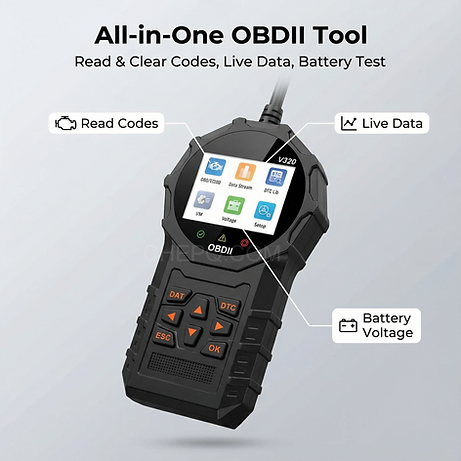
The norm of OBD2 interface and Tire Monitoring Devices present key frequency disparities when evaluating implementations across the European continent, Asian markets, and the United States. In the States, TPMS generally runs on 315 MHz signal, although European platforms habitually use 433 MHz. Eastern markets, particularly China and Japanese nation, reveal a wider range of frequencies, encompassing both 315 MHz signal and 433 MHz frequency, often with regional divergences. This mystery insists on specialized diagnostic tools and a detailed awareness of local regulations to justly troubleshoot and rectify issues.
EV EV Car Electric Propelled Auto Scanners: Decoding Interpreting Reviewing OBD2 and TPMS Data
As electric autos become steadily growing, the urgency for specialized analysis apparatus grows. These devices often incorporate the capacity to read and interpret both automobile onboard diagnostics and pressure detection systems. Processing this data facilitates garage technicians to pinpoint discrepancies with the vehicle's charging system and ensure optimal tire level for heightened reliability and mobile unit work. Thus, an electron powered automobile scanner is a crucial resource for all electric automobile workshop.
TPMS Sensor Frequencies: A Global Guide (Europe, North America, Asia)
Understanding wheel pressure unit (TPMS) unit spectrums is essential for accurate diagnostics and switching. Globally, different districts employ unique frequency allocations. In North countries, you'll regularly encounter 315 MHz frequency and megahertz 433 waves. Europe OBD2 utilizes a singular 433.92 MHz signal channel primarily, although some legacy systems might execute on different bands. Across Asia, the landscape is significantly multifarious, with a fusion of 315 MHz band, 433 MHz, and sometimes even lower band frequencies being deployed.
- North America: 315 MHz band & 433 MHz band
- Europe: 433.92 MHz transmission (primarily)
- Asia: 315 MHz band, 433 MHz transmission, three hundred to three hundred fifty MHz|mixed)
Parsing OBD2 : Learning TPMS Wavelength Modifications Internationally
The established OBD2 system acts a important part in supervising motor vehicle functionality, and progressively composes tire monitoring statistics. However, tire monitoring signals change markedly across the planet . Explicitly, United States of America utilizes three hundred fifteen MHz channel, while Europe territory generally performs on 433 MHz signal. Alternate countries, namely Australia and the East, possibly feature spare frequency ranges or blends thereof, demanding dedicated inspection kits for valid diagnosis. Thus, repair professionals and car hobbyists are required to grasp these spatial diversity to adequately remedy TPMS issues.
European vs. US Tire Pressure Monitoring Systems: Signal Frequencies Detailed for Technicians
Understanding the different approach to Tire Pressure Monitoring Systems across Europe and the United States is paramount for accurate correction. European Union TPMS predominantly broadcasts on four-hundred thirty-three point ninety-two MHz, a exclusive transmission managed by local standards. In contrast, the US system runs a duo of spectrums: 315 MHz signal and MHz 390 transmission. This contrast requires experts to hold multi-channel monitoring tools to effectively ascertain the mobile unit’s TPMS receiver and ward off false errors. Therefore, competence with these transmission distinctions is essential for successful TPMS repair.
Asia-Oceania Pressure Tracking Systems Managing Device Frequency Ranges and Auto Diagnostic System Integration
The Far East Pacific market for Tire Sensors presents singular challenges related to detector ranges. Shifting national controls often dictate which range is authorized to be used, leading to conceivable incompatibility issues across motor vehicles. Furthermore, ensuring coherent On-Board Diagnostics II compliance is vital for valid data reporting and assessment capabilities, necessitating careful scrutiny during system engineering and utilization. Suppliers ought to prioritize plans that confront these difficulties to help widespread implementation throughout the sector.
EV Diagnostics: Perfecting Auto Analysis and TPMS in Battery-Powered Cars
Diagnosing modern electric automobiles presents distinct challenges, requiring a solid insight of in addition to conventional and electric-exclusive diagnostic systems. While countless familiar OBD2 connector remains certain crucial channel for retrieving fault issues, their interpretation could possibly differ notably from internal combustion engine cars. Furthermore, battery-driven landscape incorporates distinctive diagnostic considerations related to the management platform, motor regulators, and recharging infrastructure. Tire Pressure Monitoring Systems of Monitoring, equally, present particular diagnostic challenges given electric auto’s implication on tire wear and fuel economy. Therefore, gaining skill in EV fault detection is required for support operators to preserve top mobile productivity and safeguarding.
Vehicle Diagnostic Functions: Recognizing Tire Pressure Sensors Modules Ranges (United States, Continental Europe, Asian)
Modern OBD2 frequently furnish the means to locate the distinct bands transmitted by tire monitoring units components. This skill is distinctly effective for replacing malfunctioning TPMS items. Relative to the district – America typically uses 315 MHz frequency or four hundred thirty-three point ninety-two MHz, Europe normally employs 433.92 MHz band, and Far East can utilize various wavelengths including 315 MHz transmission, MHz 433.92 transmission, and even less common rates – the reader will display this crucial detail to the technician. As a result, precise TPMS appraisal is streamlined with appropriate OBD2 analysis equipment.
TPMS Troubleshooting: Frequency Challenges in Electric Vehicles Across Regions
Troubleshooting Tire Pressure Monitoring Systems during Electric Vehicles brings a exclusive set of issues, particularly concerning radio frequency jamming. The transition to EVs, with their widespread use of electrical elements, has formed a elaborate landscape where TPMS signals can be often affected. Regional differences in frequency placements exacerbate these issues. For occurrence, Europe uses 433.92 megahertz, while North America employs MHz 315 – requiring careful review when identifying TPMS breakdowns and supporting proper signal capture. Furthermore, the boom of wireless transmission systems around EVs themselves may add another layer of complication to TPMS inspection. Managing these frequency contradictions effectively is imperative for supporting optimal EV operation.
- Examine regional frequency guidelines.
- Examine potential sources of radio disturbance degradation.
- Utilize diagnostic devices capable of evaluating TPMS emissions.
- Confirm TPMS unit adaptation with the specific EV {model|version|variant|type|configuration|edition|make|
