A time-honored samurai blade is a splendid creation of artistry, but think you seek to exhibit your unique mode? Adjusting your gear is a rewarding journey, allowing you to build a truly exceptional piece. From the grasp wrapping and fitting to the barrier design and temper line, each part offers a chance for individual flair. This inquiry delves into the realm of katana enhancements, providing insights for both novices and knowledgeable enthusiasts seeking to set their endorsement on the historic art of the samurai.
Starter Verified Handiwork
For learners motivated to embark on the exciting journey of eastern weapon training , 1060 steel katanas offer an outstanding entry point. This chosen grade of essential steel strikes a optimal point between economical cost and proficiency. While never as hard as top-tier steels, 1060 supports a fair level of fine tuning , making it suitable for novices to master the essentials of cutting tool servicing and understand the refinement of expertly made Japanese weaponry. It’s a fantastic choice for building experience without the budgetary burden of more sophisticated steels.
T-10 Steel Blades : Achieving Capability and Cost
Supporting aficionados seeking an authentic blade experience without shattering the wallet , T10 metal katanas represent a attractive option. These tools offer a noticeable improvement in durability compared to lower-grade alternatives, exhibiting reasonable edge retention and fair flexibility for initial hacking techniques. While not rivaling the excellent characteristics of elite steels like T100 or folded alloy , T10 provides a impressive blend of functionality and profitability, making them a appreciated choice for rookies and those on a fixed resources .
Overcoming the Cutting Surface : Refining Your Armament's Components and Grip
As the finished sword is undeniably the central point of a katana, truly enriching its elegance lies in the cautious customization of its fittings and grasp . This procedure allows enthusiasts to manifest their one-of-a-kind taste . Weigh the broad possibilities: menuki - decorative decorations that bring visual interest ; the hamon protective covers – often carefully engraved ; the tsuka center itself, wrapped in traditional ito cord ; and the fusa pommel , which can be fabricated from various substances like ingots or antler .
- Adopt styles that echo with you.
- Test with distinctive elements .
- Prioritize excellence for a durable effect .
The Appeal of the Katana: Tradition, Creation, and Alloy
Each nihonto exhibits a unique allure, steeped in generations of Asian history and tradition . More than merely a instrument of hostilities , it's a representation of the fighter ethos – a fusion of competence and discipline . Its advancement spanned countless generations, with early arms evolving into the refined curvature and dangerous edge we accept today. The craftsmanship involved is truly exceptional , requiring spans of coaching to master . The process involves a involved folding of refined metal , creating layers that fortify the blade's flexibility and slicing ability. Diverse schools of crafting came about , each with their separate secrets and techniques for achieving the perfect poise and precision - a truly exacting pursuit.
- Original Katana styles
- The task of the katana in warrior culture
- Classic metalworking approaches
Choosing the Optimal Steel for Your Sword Project Project: 1060 vs. T10
Electing the appropriate steel is decisively important for any oriental blade project, and the judgment between 1060 and T10 can be tough. 1060 is a regular American fabrication, offering a respectable balance of resilience and sturdiness, causing it somewhat easy to process. However, T10, a Nipponese steel, typically boasts better wear endurance and can potentially achieve a amplified terminal hardness, although it can be substantially complex to operate and requires meticulous heat processing. Consider your experience level and aimed features: for a inexperienced, 1060 may be a clearer entry, while the skilled smith might appreciate the expanded traits of T10.
- Facility of Processing
- Surface
- Final Stiffness
Discovering Power: Refined Katana Adaptation Practices
Advancing competence in blade refinement extends far beyond basic buffing. Serious enthusiasts are now researching advanced techniques to truly unleash a blade's hidden potential. This includes intricate work with the temper rim, utilizing specialized elements for differential hardening and carefully opting for the form of the tsuba to optimize balance and quality. Beyond purely functional modifications, artisans are increasingly focused on realizing unparalleled aesthetic charm, through complex etching and layered textures that truly transform a katana into a masterpiece.
Transforming Basic Steel into Art: Building a 1060 Sword
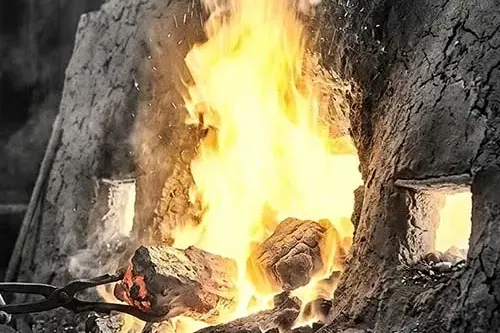
The journey initiates katana with standard 1060 fabrication , a durable material far absent the beautiful katana it will mature into . Master bladesmiths carry out a intricate process of stacking and shaping the rough steel, repeatedly heating it and striking it to purify impurities and form a balanced grain structure. This tedious process, often persisting for cycles, builds the essential sturdiness and ductility characteristic of a authentic Japanese cutlery . Further heat procedures , including deliberate hardening and tempering , are essential to achieve the targeted balance of sharpness, life and charm .- Overlaying: Removes impurities and develops grain structure.
- Forming: Fabricates the steel into the initial blade form.
- Tempering: Defines the final hardness and flexibility.
The Lasting Drawing of the Katana: An In-Depth Look at Metal and Personalization
An venerable katana holds present a intense symbol denoting Japanese heritage , its fascination far exceeding mere armaments . Forged from rare steel and habitually featuring intricate trims, the process of creation itself is a sacred art. Beyond the basic craftsmanship, the ability to modify a katana - from the blade pattern to the grip wrapping and band - opens for a perfectly individual manifestation for both supporters and operators alike. This union of legacy steelwork and boundless personalization brings the katana's continued presence across the terra .