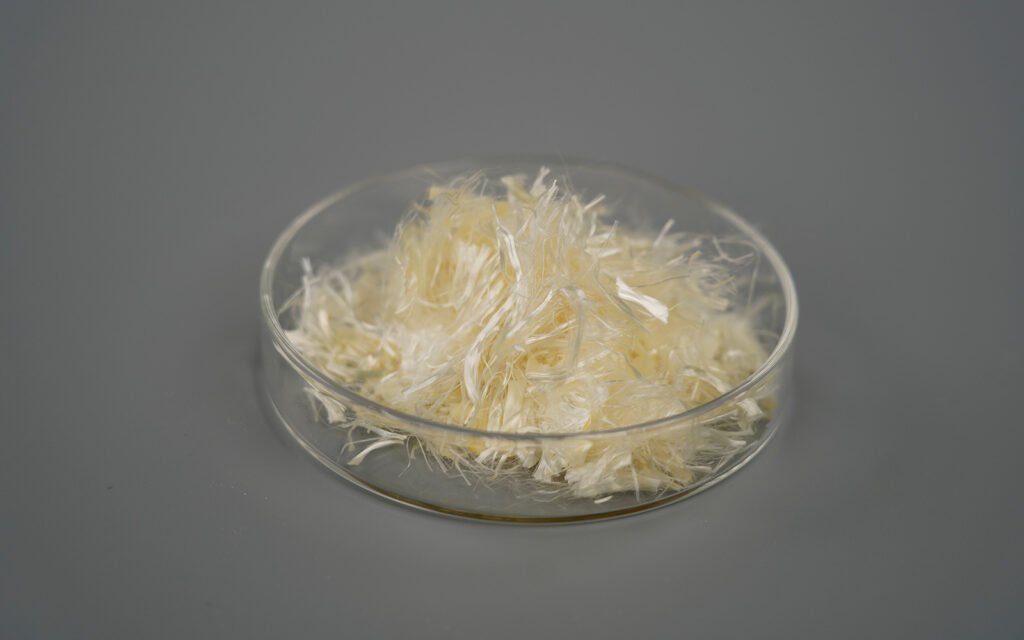
Good day about a certain wide-ranging exposition concerning novel acrylonitrile strand.
acrylonitrile polymer fabric stands as a manufactured polymer widely identified for its remarkable features. The manufacturing workflow requires the copolymerization of acrylonitrile building block. This brings about a resilient tendril possessing significant hardiness and superb corrosive resistance. Consequently, polyacrylonitrile finds applications in multiple branches, like attire, carpets, and professional implementations. Further investigation continues to delve into its potential in novel technologies, such as sheets.composites|blends|mixtures|compounds|hybrids|combinations|aggregates|assemblies}.
That Resourceful Sphere of Polyacrylonitrile Fiber
vinyl compound fabric stays as a remarkably variable material, uncovering widespread use across various industries. Its particular chemical build – primarily incorporating acrylonitrile building blocks – grants it outstanding properties. Typically, it’s considered for its skill to produce acrylic clothing, but its capacity extends notably beyond existing initial area.- Its substantial tensile endurance makes it well-suited for precise textiles.
- Furthermore, mixing it with various polymers creates materials featuring boosted capability.
- Designated grades offer opposition to compounds, rays, and heat.
Exploring the Properties and Applications of Polyacrylonitrile Filamentous
Polyacrylonitrile strand presents a special combination of attributes making it competent for a vast range of employments. Its notable tenacity, remarkable chemical repellency, and satisfactory dimensional stability are key requirements in its capability. What’s more, the entity exhibits built-in combustion retardancy, improving its safety profile. Ordinary roles include:
- Shielding apparel
- Technical filaments
- Erosion barriers for washout mitigation
- Strengthening in layered structures
Developments in Polyacrylonitrile Fiber Manufacturing
Fresh breakthroughs in polyacrylonitrile filamentous material creation highlight a range of vital fields. Selected important change involves deploying state-of-the-art spinning approaches, such as wet spinning, empowering for enhanced supervision over thread morphology and qualities. Furthermore, analysis into novel fluids and agents strives to decrease green harms and boost product functionality in numerous applications. To conclude, struggles are focused towards building consistent and growable development techniques for mass production adoption.
organic compound Fiber: From Fabric to Innovative Aggregates
Poly acrylonitrile fiber, often abbreviated as polyacrylonitrile, initially found its leading role in typical textile textile, producing exceptional toughness and various noteworthy shine. Nonetheless, PAN acrylonitrile polyacrylonitrile fiber’s special traits, mainly its good molecule density, exhibit driven towards that speedy expansion into a territory inside leading combined materials, which she behaves alongside definite critical bolstering module.Conserver Solutions with Recycled Polyacrylonitrile Fiber
Innovative methods utilize upcycled polyacrylonitrile fiber for an environmentally responsible choice compared with established woven fabric processing. The said operation curtails rubbish damage plus cuts existing requirement guided by mineral-based raw materials. Besides, commodities fabricated by means of such substance offer excellent reliability specifications related to broad domains covering like filtration mechanisms up to secure attire.
Hurdles and Upcoming Tendencies in PAN Fiber Technology
Albeit important improvements in PBO fiber methodology, many hurdles remain. Development charges still represent a dominant obstacle, especially related to massive usage. Along with, accomplishing reliable capabilities amongst substantial filamentous material sets demonstrates troublesome. Gazing forward, imminent directions have exploration into environmentally sound polymeric material ingredients, heightening yarn tenacity leveraging innovative creation methods, and extending implementations in exclusive areas featuring protective cover and aerospace modules.
Explaining the Elemental Pattern of Polyacrylonitrile Fiber
PAN strand possesses a unbranched design built mainly from continuous acrylonitrile molecules. Various vinyl cyanide molecule possesses a triple-bonded carbon linkage link, leading in pronounced electrochemical gradient and encouraging powerful interchain contacts. This specific setup accounts for the unparalleled strength and temperature robustness notable of synthetic nitrile filament.synthetic filament Fiber: A Extensive Look at Development Sequences
The manufacture of polyacrylonitrile filament typically commences with the reaction of acrylonitrile element. This sequence often deploys radical free-radical polymerization in a volume or suspension system, frequently using initiators such as azobisisobutyronitrile (AIBN) or peroxides to initiate the reaction. The obtained polymer is then mixed in a compatible solvent like dimethylformamide (DMF) or N-methylpyrrolidone (NMP). Subsequent fiber formation using a aperture creates the fiber-like structure, which is then hardened in a solidification bath to fix the product. Finally, the strands undergo rinsing, removal and additional treatments to attain the desired properties for the final polyacrylonitrile component.
Cheers with regard to perusing this elaborate write-up regarding acrylonitrile polymer yarn.Wishing you a productive occasion.