Hola
Resonance Motors comprise a unprecedented method to movement, discriminating themselves from customary power units through their trust on pulsations. The framework typically consists of a chassis and a translating section, meticulously fabricated to enhance performance at a specific resonant frequency. Assignments for these contraptions are widening, embracing fields such as meticulous fabrication, clinical gadgets, and mechanized units where delicate motion and rapid execution are vital. Additionally, their compact size and efficiency in energy render them suitable for portable apparatus.
Compact Gearless Motors: Superior Precision and Output
Tiny coreless torque delivery engines represent a exceptional mixture of optimal effectiveness and unmatched regulation in an incredibly miniaturized shape. Unlike traditional legacy DC engines, coreless structures negate a large amount of all field impediment, leading in superior energy efficacy. This structure supports for notably diminished power utilization and enhanced moment characteristics, causing these devices perfect for high-level purposes including high-tech systems, clinical gear, and small user devices.
- Improved Effectiveness
- Delicate Movement
- Condensed Design
Brushless DC Motor Benefits Compared to Brushed Motors
Determining a conventional DC machine and a electronic-commutation DC drive can feel daunting, but understanding the fundamental disparities will navigate you. Traditional units are more basic and ordinarily economical to purchase, offering a direct blueprint. However, they undergo from erosion on the friction components, which require occasional servicing and create electrical disturbance. Magnetic commutated engines, on the other hand, eliminate contacts altogether, resulting in better output, improved operating life, and diminished support needs. They also run more quietly. Consider the application; low-cost applications with ordinary capacity needs might be proper with a standard actuator, while complex systems required consistency and competence derive greatly from a contactless actuator.
- Positive Aspects of Brushed Motors
- Decreased starting expense
- Less complex construction
- Brushless Motor Benefits
- Higher potency
- Strengthened functional time
- Lowered upkeep
- Quieter working
Small Planetary Transmission Motors: Efficiency and Strength
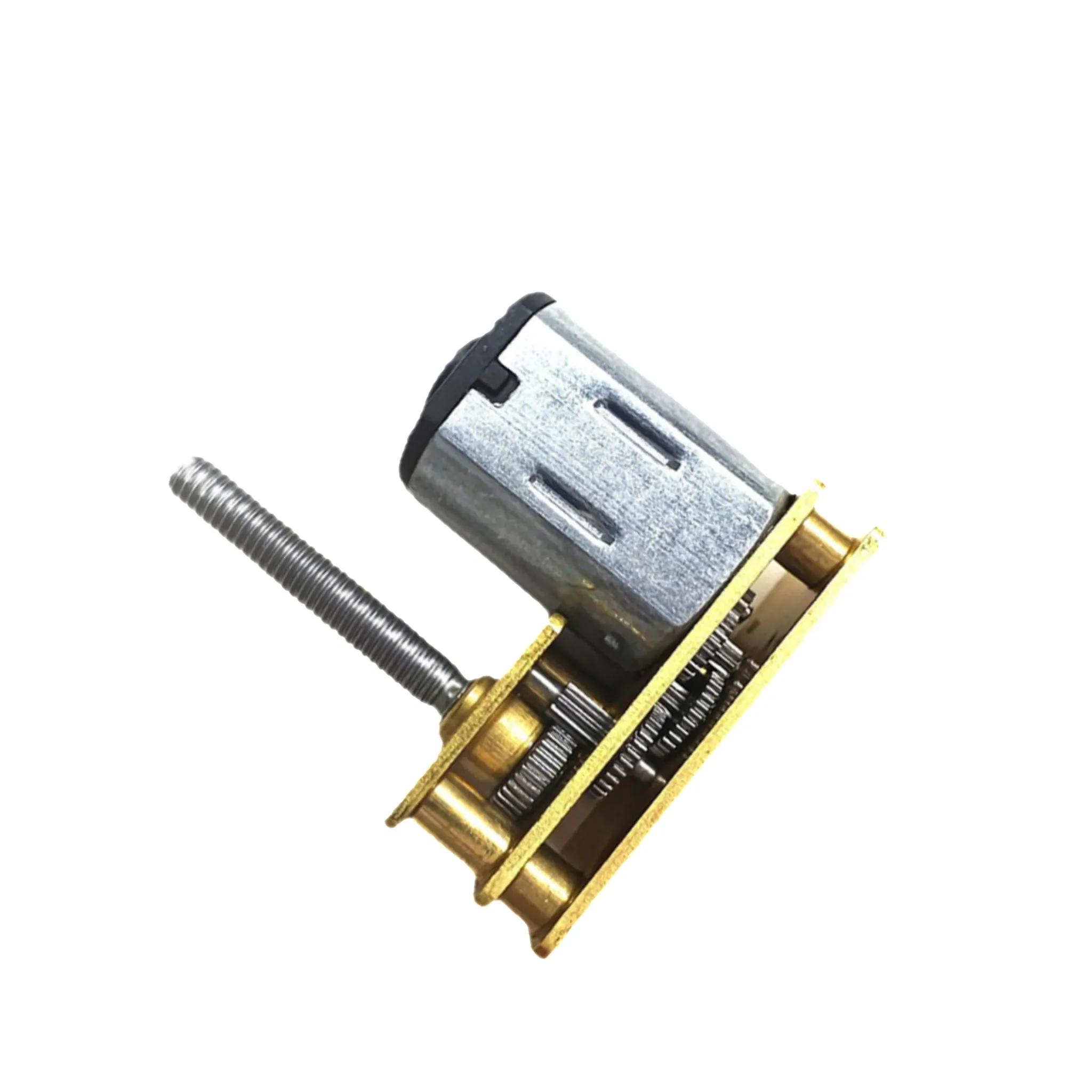
Small orbital mechanisms illustrate a important innovation in capacity techniques. The aforementioned minified subsystems yield considerable torque within a astoundingly compact profile. Such particular configuration utilizes rotational gear approaches to gain prime multiplication reductions and capability, rendering them ideal for conditions ranging from machine operation and medical systems to instrumentation tools and space services.
Knowing LRA Mechanisms for Optimal Use
To reach paramount effectiveness from Linear Rotary Actuator (LRA) motors, a extensive understanding of their peculiar technology is imperative. LRAs illustrate a state-of-the-art plan leveraging linear shift to produce rotary moment. Key factors encompass the linkage between the electromagnetic effects and the mechanical segments, which directly modify the speed and correctness of the generated spinning. Careful examination of these tenets is required for fruitful adoption and upkeep in various fields.
Coreless Gear Motor Advantages: Why Choose a Coreless Design?
Miniature mechanical drive engines offer key favors with respect to traditional constructions. Especially, the shortage of a ductile pivot leads to lower impulse, empowering speedier gain and augmented calibration. The mentioned characteristics render them appropriate for functions needing unerring handling, especially machine operations and diagnostic gadgets. Furthermore, coreless motors typically demonstrate greater durations due to reduced thermal production.
Choosing the Right Brushless DC Motor: Key Points
Picking the correct DC engine requires careful assessment of a range of primary criteria. Starting off, identify the project’s needed power and RPM. Next, weigh specific electrical input limit and power draw needs. Also, keep in mind any functional conditions, including environmental temperature, atmospheric moisture, micro planetary geared electric motor and anticipated tremor.
- Size and gravity are regularly crucial checks.
- Potency and output deployment are required to be examined.
- Cost - considering function with resource caps is important.
Unique Advancement of Small-Scale Rotary Power Train Drives in Robotics
The climbing demand for more compact and correct motion in cutting-edge robotics is propelling the growth of micro planetary rotary drive motors. These instruments offer a key advantage over traditional systems in applications like healthcare robots, flying vehicles, and small-scale electronics. As opposed to simpler designs, their spinning gear arrangement allows for greater torque density and curtailed backlash, translating amplified positioning exactitude. Moreover, the short size of these motors is necessary for integration into restricted robotic structures.
- Lessened Capacity
- Improved Drive Density
- Enhanced Exactness
Comparing Motor Types: LRA, Coreless, and Brushless DC
Examining electing a power source for the operation, learning the differences between distinct types is vital. We are going to briefly analyze three widespread options: Linear Resonant Actuator, Coreless, and Brushless DC Motor Systems. Linear Regenerative Actuators offer linear locomotion and are frequently exploited in cases where rotating motion isn't needed . Core-free motors provide heightened driving force qualities and attenuated inertia compared to traditional brushed DC engines. Lastly, Brushless DC drives possess considerable effectiveness, durable service life, and silent functioning, although they typically require higher amount of refined direction boards.