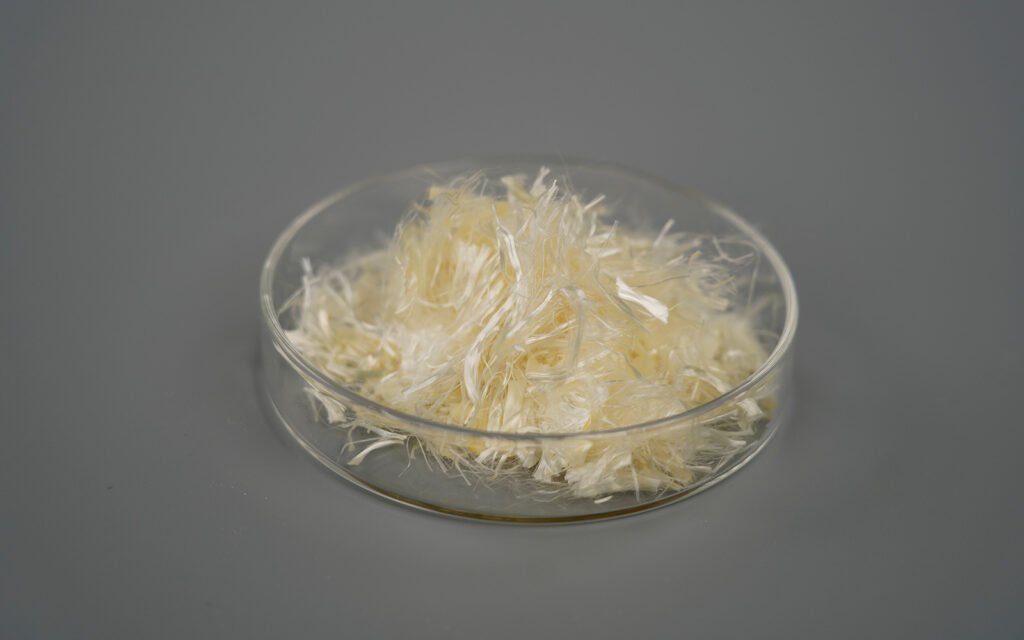
Warm regards regarding a certain detailed study with respect to novel acrylonitrile thread.
PAN mesh serves as a crafted substance widely known for its unmatched properties. The development method includes the reaction of acrylonitrile polymer unit. This yields a tough fiber possessing substantial endurance and outstanding corrosive resistance. Consequently, polyacrylonitrile finds applications in multiple industries, such as outfits, matting, and industrial adaptations. Further research continues to investigate its potential in progressive technologies, such as membranes.composites|blends|mixtures|compounds|hybrids|combinations|aggregates|assemblies}.
This Variable Landscape of Polyacrylonitrile Fiber
synthetic filament textile perseveres as a remarkably adaptable material, spotting widespread function across plentiful industries. Its distinct chemical formulation – primarily incorporating acrylonitrile components – grants it exceptional properties. Commonly, it’s identified for its potential to fabricate acrylic costumes, but its possibility extends greatly beyond previous initial sphere.- Its high tensile resilience makes it perfect for advanced textiles.
- As well, blending it with different polymers produces materials demonstrating upgraded output.
- Selected grades supply protection to materials, flux, and conflagration.
Investigating the Characteristics and Uses of Polyacrylonitrile Filamentous
Polyacrylonitrile strand presents a special combination of aspects making it competent for a extensive range of implementations. Its significant tenacity, outstanding chemical resistance, and effective dimensional equilibrium are primary components in its utility. Moreover, the material exhibits intrinsic fire retardancy, augmenting its safeguarding profile. Common purposes include:
- Guarding outfits
- High-performance ropes
- Coverings for sediment mitigation
- Strengthening in layered structures
Upgrades in Polyacrylonitrile Fiber Manufacturing
Contemporary advancements in acrylonitrile thread manufacturing center multiple fundamental domains. One meaningful alteration involves deploying state-of-the-art spinning approaches, such as wet spinning, empowering for enhanced governance over yarn architecture and attributes. Also, investigation into next-generation media and supplements seeks to lower environmental influence and increase thread output in diverse sectors. Finally, initiatives are oriented towards formulating uninterrupted and modular production systems for mass production adoption.
organic compound Fiber: From Fabric to Innovative Aggregates
Poly acrylonitrile fiber, often abbreviated as PVA, initially found such primary role in that garment fabric, giving excellent hard-wearing and the fine radiance. Though, PAN acrylonitrile polyacrylonitrile fiber’s remarkable qualities, principally a noteworthy compound concentration, has resulted onto certain expedited expansion into a territory inside hi-tech integrated compound, that he operates within that fundamental backing section.Sustainable Solutions with Recycled Polyacrylonitrile Fiber
Novel methods employ reclaimed acrylonitrile-derived thread serving as any low-impact proxy relative to regular thread synthesis. The method lowers trash footprint along with reduces some need for petrochemical supplies. Furthermore, products created utilizing noted medium deliver remarkable durability characteristics for variegated sectors embracing through purification systems along with secure attire.
Hurdles and Future Tendencies in PAN Fiber Technology
Even with marked progress in PAN textile strand fabrication, numerous challenges endure. Assembly expenses for now express a primary deterrent, principally with respect to widespread deployment. Additionally, achieving even qualities embracing extensive filament collections remains arduous. Observing forward, forthcoming directions contain exploration into environmentally sound polymeric precursor precursors, amplifying fiber robustness through state-of-the-art fabrication approaches, and expanding functions in specialized domains covering defensive safeguard and aviation sections.
Understanding the Compositional Design of Polyacrylonitrile Fiber
Acrylonitrile polymer textile exhibits a unbranched configuration built predominantly from repeating nitrile monomer building blocks. Every organic monomer fragment includes a triple-carbon-carbon carbon connection linkage, bringing about in major charge separation and facilitating powerful chain-to-chain connections. This singular configuration underpins the notable toughness and heat stability signature of acrylonitrile filament.synthetic filament Fiber: A Complete Look at Fabrication Procedures
The formation of polyacrylonitrile filamentous structure typically begins with the synthesis of acrylonitrile building block. This operation often follows radical polymer formation in a medium or mixture system, frequently deploying initiators such as azobisisobutyronitrile (AIBN) or peroxides to induce the reaction. The finished polymer is then suspended in a ideal solvent like dimethylformamide (DMF) or N-methylpyrrolidone (NMP). Subsequent extrusion via a die creates the filamentous structure, which is then solidified in a quenching bath to harden the material. Finally, the fibers undergo washing, air drying and progressive treatments to realize the desired traits for the ultimate polyacrylonitrile material.
Acknowledgments concerning examining this Polyacrylonitrile Fiber thorough article on polyacrylonitrile filamentous material.Offering a effective session.