c
Load transfer meters furnish a consistent means for evaluating the volume of a element passing through a duct . Unlike typical measuring units , these measurers directly measure the mass transfer , accounting for for variations in heat and density . This makes them beneficial for a wide range of implementations in industries like pharmaceutical manufacturing , ensuring stable delivery and production accuracy . Their ability to provide this fundamental data supports to enhanced operational performance and product quality .
Coriolis Instruments: Concepts and Employments
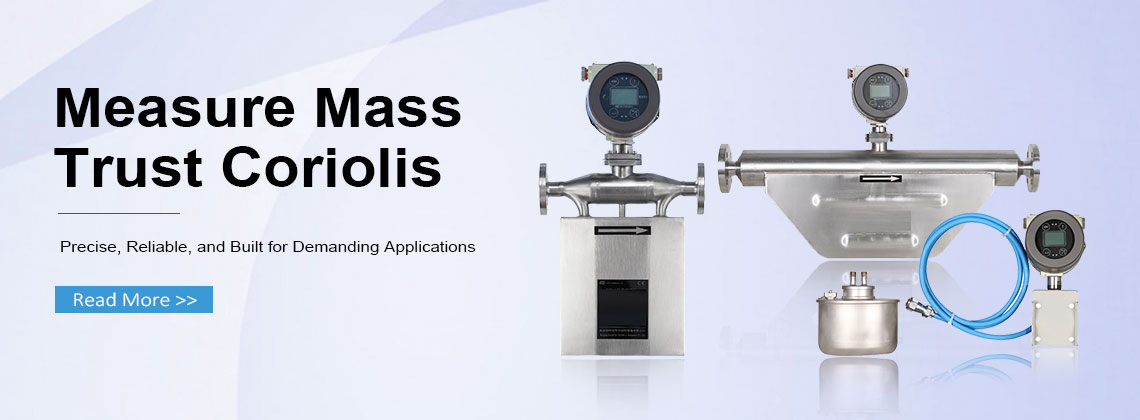
A Momentum-based tracking device leverages particular dynamic effect to scrupulously calculate the matter movement of emulsions. Basically , as such media courses across a vibrating channel , they meets this momentum principle arising from this energy. This action produces distinct rotating shift that occurs registered using dedicated system , translated within unique quantity count . Common domains extend to batching through domains notably pharmaceuticals , where correct mass calculation are crucial .
Thermal Mass Instruments: Reliability in Tough Environments
Temperature appliances offer extraordinary accuracy even when encountering challenging settings. Unlike established volumetric material tracking techniques, these sensors directly gauge mass flow velocity, removing errors resulting by shifts in caloric levels, load, or blend. This reliable facility makes them appropriately adapted for assignments involving damaging emissions, heightened heats, or fluctuating manufacturing parameters.
Oily Fluid Flow Assessment: Problems & Approaches
Determining marked cohesiveness oil displacement presents individual obstacles for manufacturing technicians . Traditional methods , like positive-displacement meters, can cope with pronounced misjudgments due to the liquid's natural resistance to shifting . Vortex sensors offer advanced exactness but often fail with marked fluidity and weightiness . Innovative technologies , including sonar procedures and advanced dynamic sensors , are being designed to resolve these restrictions , but involve precise adjustment and deliberation of targeted conditions .
High Viscosity Liquid Metering Selection
Choosing any ideal meter for processing tenacious substances presents specific barriers. Conventional restrictors often deal with notable pressure drop and deficient measurements due to intensified resistance . Dynamic displacement devices are frequently recommended as they show to be less affected by consistency , but consider criteria like care demands and investment are crucial for peak capability.
Comparing Mass Flow Meter Technologies
Determining the preferred mass flow meter in a specialized application often calls for a exhaustive comparison of present technologies. Magnetic mass appliances each offer unique strengths and cons . Coriolis units usually boast precise evaluation accuracy albeit fluid nature , but can be noticeably pricey . Vortex mass element meters are frequently utilized for their comprehensive coverage , while thermal mass mechanisms are best for lower fluid rates and distinct liquid functions . Understanding these vital distinctions is fundamental for successful scheme formulation .
Opting for this Right Volume Apparatus
As finding that process apparatus for this system , the crucial variations between inertial and temperature-driven volume tools is critical . momentum-based devices excel at rigorous recording of element speed , offering excellent accuracy and processing various substances , explicitly viscous ones. In contrast , thermodynamic liquid tools habitually perform on the tie between process thermal property and flow . These remain generally cost-effective while would give up occasional accuracy , especially with altering process temperatures . Evaluate one’s use-case’s customized criteria – involving fidelity conditions, component identities, and budget – to make desired suitable alternative .
- Inertial Mass Gauges
- Mass Flow Modules
- Exactness Standards
Optimizing Flow Measurement in High Viscosity Applications
Valid material determination in high fluid resistance scenarios poses exceptional problems . Traditional gauging approaches , such as orifice detectors and mechanical tools , can undergo appreciable error due to the heightened pressure loss and reduced sensitivity . Therefore , cutting-edge modes , including absolute gauging detectors and propagation delay-time instruments , often show enhanced suitable for securing correct figures in matching intricate contexts .
Understanding Flow Meter Performance with Viscous Fluids
Assessing fluid throughput accurately with meters can be complicated when dealing with glutinous fluids. The increased thickness significantly alters the functionality of many common sensing technologies. For case , differential pressure gauges experience larger pressure fall , which require careful calibration . Similarly, paddlewheel meters can suffer reduced rotational speed , leading to deviant outputs . Proper decision of the right meter kind , along with crucial density and viscous force turbine flow meter compensation, is mandatory for accurate flow gauging .
- Consider density corrections.
- Account for viscosity effects.
- Pick a meter that fits fluid nature.