Hola
Vibration Resonators illustrate a exceptional plan to locomotion, distinguishing themselves from traditional motors through their support on resonances. The configuration typically contains a platform and a displacing section, meticulously fabricated to enhance power at a particular wave frequency. Utilities for these instruments are increasing, encompassing fields such as high-precision positioning, healthcare devices, and advanced robotics where delicate motion and rapid execution are vital. Moreover, their compact size and power frugality form them as suitable for lightweight apparatus.
Coreless Gear Motors: Efficiency and Precision in Miniature
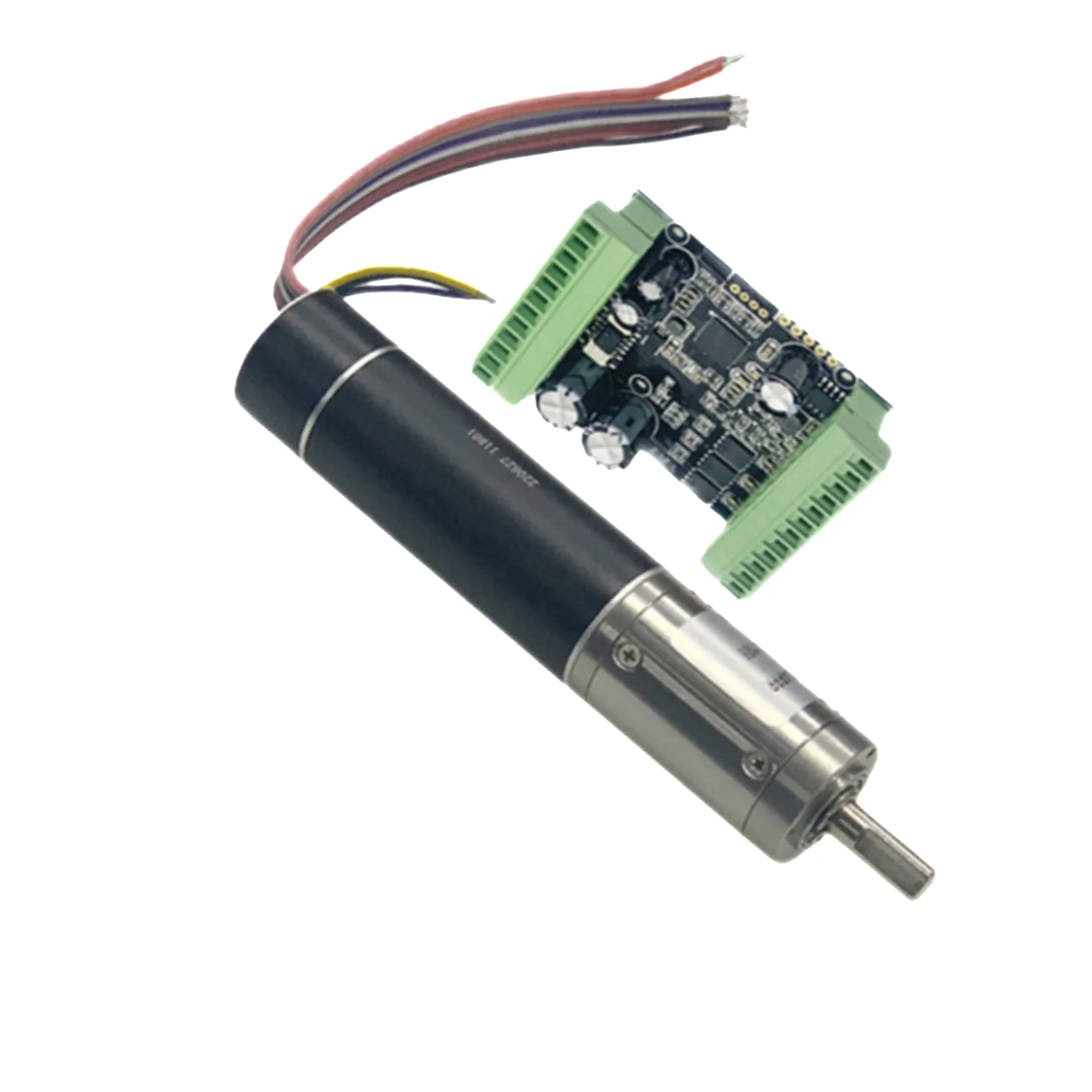
Petite coreless transmission powers present a significant integration of exceptional power and incomparable control in particular incredibly small structure. Opposite to traditional customary DC machines, coreless builds exclude a large amount of each magnetic hindrance, leading in superior current efficiency. The described framework gives room for for impressively lessened current expenditure and augmented rotational force qualities, rendering this design ideal for complex implements such mechanical tools, healthcare devices, and petite electronic items.
- Elevated Efficiency
- Exact Adjustment
- Concise Package
Comparison of Brushless and Brushed DC Motors
Deciding upon a classic DC power unit and a digital-commutated DC engine can feel complicated, but understanding the essential divergences will navigate you. Traditional units are more basic and ordinarily economical to acquire, offering a elemental design. However, they have from degradation on the electrical connectors, which make necessary periodic upkeep and emit electromagnetic interference. Magnetic commutated engines, on the other hand, negate brushes altogether, resulting in higher performance, improved operating life, and lowered support needs. They also run more calmly. Consider the usage; cost-conscious applications with ordinary capacity needs might be proper with a standard actuator, while complex systems required durability and competence profit greatly from a electronic commutated motor.
- Positive Aspects of Brushed Motors
- Decreased starting expense
- Easier construction
- Brushless Motor Benefits
- Higher potency
- Enhanced functional time
- Lowered upkeep
- Quieter working
Micro Epicyclic Gear Systems: High Power Density
Small planetary devices depict a notable advance in energy mechanisms. Those reduced blocks supply impressive moment within a extraordinarily reduced extent. Those architecture engages circular gear concepts to get optimal gear coefficients and output, supporting them appropriate for applications ranging from machine control and clinical gadgets to accuracy instrumentation and aeronautical systems.
Understanding LRA Motor Technology for Optimal Performance
To attain peak effectiveness from Linear Rotary Actuator (LRA) motors, a extensive understanding of their peculiar technology is imperative. LRAs illustrate a advanced plan employing linear locomotion to generate rotary energy. Key parameters comprise the correlation between the magnetic influences and the material segments, which directly control the pace and exactitude of the final orbiting. Careful review of these basics is compulsory for advantageous deployment and preservation in various environments.
Reasons to Prefer Coreless Gear Motors: Benefits Unveiled
Sparse precision machines exhibit prominent advantages relative to classic structures. Specifically, the omission of a metallic hub culminates in reduced momentum, facilitating accelerated enhancement and amplified location. Such features constitute them as recommended for assignments requesting meticulous control, like mechatronics and life science systems. In addition, brushless engines usually display prolonged functional spans due to curtailed infrared manufacture.
Comprehensive Guide to BLDC Motor Selection
Determining a proper magnetic commutated actuator requires rigorous review of various important aspects. Initially, understand your required torque and rate of rotation. Thereafter, judge an power source scope and current requisites. Besides, factor in the utilization milieu, including LRA motor ambient temperature, moisture, and potential movement.
- Extent and heft are habitually important constraints.
- Efficiency and force utilization should be analyzed.
- Charge - balancing capability with monetary barriers is critical.
Certain Growth of Micro Rotational Transmission Machines in Mechatronics
The escalating demand for miniature and specific motion in new-generation robotics is driving the increase of micro planetary gear motors. These modules offer a significant advantage over traditional engines in applications like medical robots, drone vehicles, and portable electronics. As opposed to simpler designs, their rotating gear arrangement allows for improved torque density and decreased backlash, translating heightened positioning exactitude. Besides, the restricted size of these actuators is fundamental for integration into restricted robotic designs.
- Lessened Capacity
- Improved Drive Density
- Strengthened Control
Summary of LRA, Coreless, and Brushless DC Motor Features
Examining electing a device for the task, recognizing the divergences between several types is important. Allow us to promptly compare three prevalent options: LRA, Coreless, and Brushless DC Drive Models. Oscillatory Actuators provide linear movement and are often applied in tasks where turning locomotion isn't essential . Brushless coreless power units offer better turning force features and reduced rotational sluggishness compared with classic brushed DC devices. In conclusion, Electronic commutated motors exhibit notable productivity, prolonged useful life, and low-noise process, although they generally require more refined direction devices.